
The "Pure" Trap: Why Your Fabric Might Not Be What You Think It Is
"In our market, this is considered Pure Silk." If you’ve heard that sentence, you’ve likely been served a "Market Pure" lie. In the wholesale world, "Pure" has shifted from a technical standard to a marketing suggestion. The result? You buy silk, but your customer gets "sweaty" polyester—and your brand takes the hit.
Nikita Garg
4/7/20263 min read
We’ve seen this play out more times than we can count, and almost always, it starts with a "bargain."
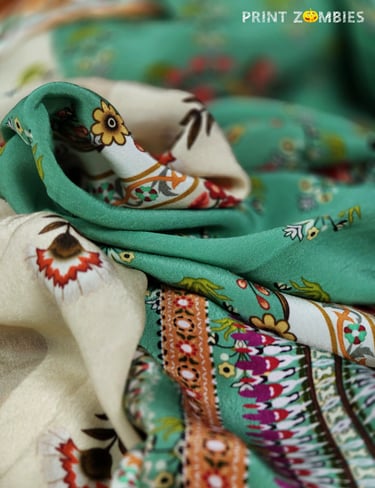
A designer arrives with a clear vision, a locked-in collection, and a fabric they’ve sourced—usually something described as “Pure Silk Georgette” at a price that feels like a steal. On paper, it’s a win.
And then the sample arrives.
At first glance, it looks fine. But the moment you touch it, something feels slightly off. It doesn’t breathe like silk. The drape isn't fluid; it holds shape in places where it should fall naturally. That’s when the doubt starts creeping in.
When you go back to the vendor, the explanation is usually dismissive:
“In our market, this is considered Pure Georgette.”
That sentence quietly shifts the definition of “pure” from a technical standard to an interpretation. Once that line is blurred, your brand’s reality and your customer’s expectations begin to drift apart.
Why This Happens (And the Pricing Reality)
In many wholesale markets, fabric names describe a look or finish rather than fiber composition. Terms like “Dola Silk” or “Chinon” are often used as categories. This is how two fabrics can share a name but behave completely differently under a needle or a heat press.
There is also a pricing reality that few talk about openly: Silk and viscose exist in entirely different cost brackets. Genuine silk doesn’t suddenly become "accessible" without a reason. If the price feels too good to be true, the fabric isn't primarily silk.
Our Philosophy: The Dominant Yarn Base
We’ve learned that technical percentages often confuse more than they help. To keep things grounded, we follow a simple internal rule: We look at the dominant yarn base.
If a fabric is 90% viscose and 10% silk, we call it a viscose fabric. We don’t do this to simplify things; we do it because the dominant fiber defines how the garment drapes, how it feels on the body, and how it performs after printing.
It is always better for you to be pleasantly surprised by a fabric performing better than expected, rather than feeling let down because it didn't live up to a "Pure" label.
The Difference in Conversations
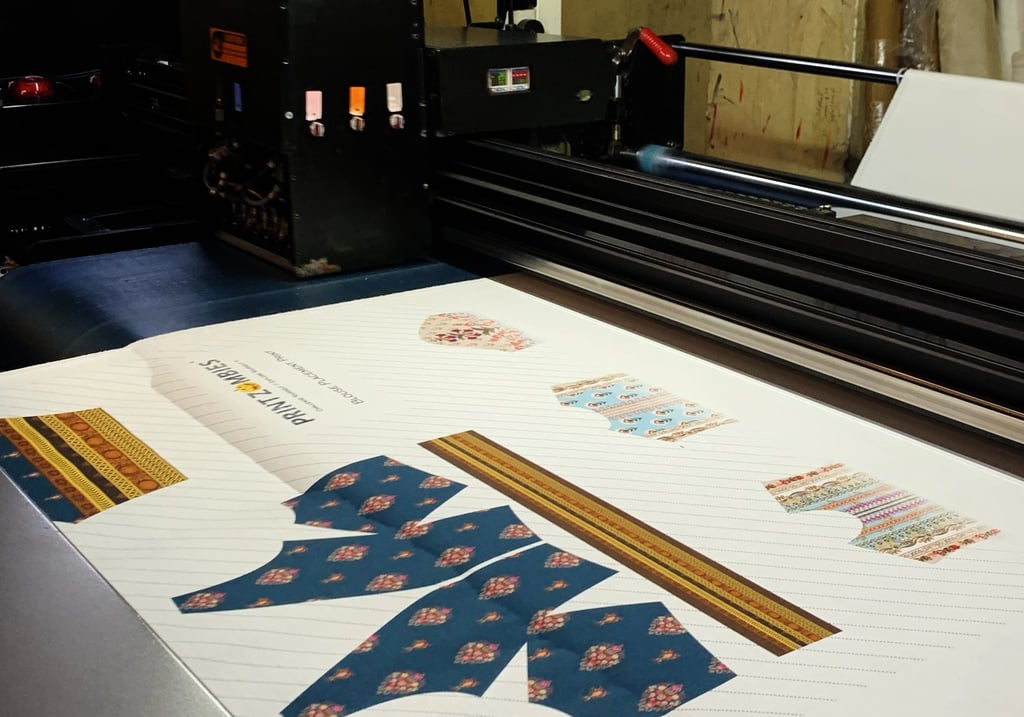
Most fabric vendors employ sales staff trained to keep the inventory moving. At Print Zombies, the people you speak with are the ones managing production. We don't just ask "What is this fabric?" We ask:
· How will your specific print scale sit on this texture?
· Does this weight actually suit the silhouette you’ve planned?
· How will this behave after the third wash?
Sometimes that means suggesting a less expensive option, or asking you to reconsider a choice entirely. We aren’t trying to slow you down; we’re protecting the foundation of your collection.
Where It Actually Starts Hurting
The real impact isn't felt during sampling. It’s felt after production when the garments reach your customers.
Customers don't talk in fiber compositions; they talk in experiences. They won’t say "the silk-to-synthetic ratio is off"—they’ll say the dress feels "sweaty" or "stiff." At that point, it’s no longer a fabric issue; it’s a trust issue for your brand.
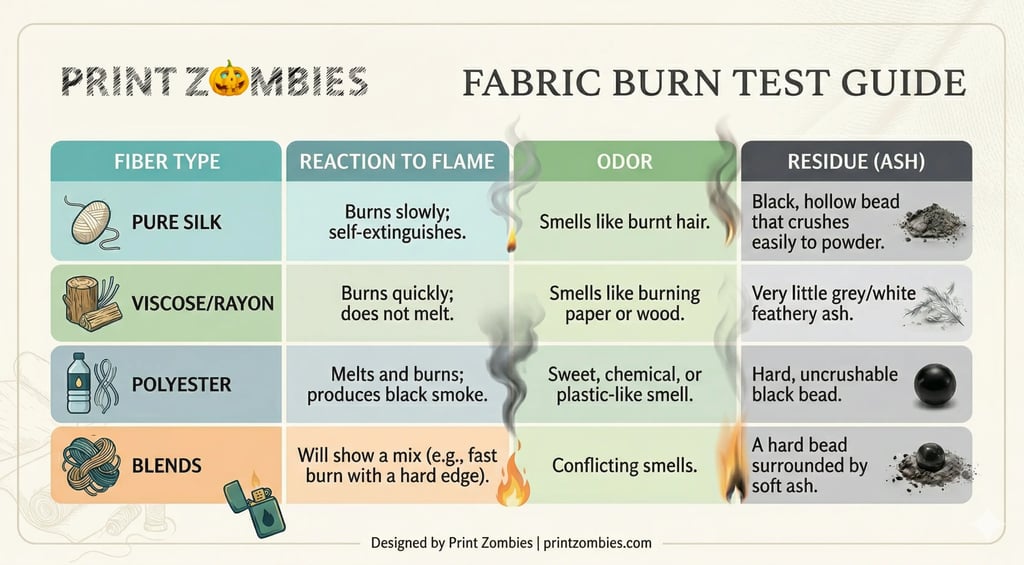
How to Test It Yourself (The Burn Test)
If you want a straight answer, stop reading the label and start testing the fiber. The "Burn Test" is the most reliable way to strip away market jargon.
Why We’re This Particular
This approach isn't just about ethics; it's about stability. Every misunderstood fabric creates a chain reaction of sampling delays and production pivots.
Keeping things straightforward from the start keeps the process predictable. We’d rather have an honest, slightly uncomfortable conversation with you today than watch your collection struggle in the hands of your customers tomorrow.
Clarity at the fabric stage saves more time, money, and stress than any last-minute fix ever can.
— Print Zombies' Team
Useful Links
printzombies@gmail.com
+91 99999 11480
© 2025-2026 Print Zombies® – All Rights Reserved
Serving designers across UAE (Dubai, Abu Dhabi, Sharjah), Oman, Qatar, Saudi Arabia, Bahrain, Canada, USA and India — with the same care, creativity, and commitment in every meter.
Rated ★4.9 on Google with 280+ reviews from domestic and international designers.
Print Zombies is a digital fabric printing studio offering custom fabric printing with no MOQ and expert print designing support across 90+ premium fabric bases.
Quick Navigation Links
Parent Company
Pradisha YarnTech® Solutions Pvt. Ltd.
Delhi, India
pradishayarntech@gmail.com
info@printzombies.ae
Legal






Most Searched Topics
Fabric Sourcing for Digital Printing
Services in Canada - www.printzombies.com/ca
Services in UK - www.printzombies.co.uk
Services in India - www.printzombies.com