
We’re Fashion Designers First.
That’s Why We Catch Problems Others Miss. Why Large Production Setups Don’t Always Work for Designers
3/13/20264 min read
This is a question that usually comes wrapped in politeness:
“You’re fashion designers, not industrialists — are you sure you can handle fabric printing at scale?”
It’s a fair question.
And it usually comes from a good place.
In most people’s minds, printing belongs to factories, machines, and production managers — not designers. Design is seen as creative. Printing is seen as technical. The two are often kept at arm’s length.
Our experience has been the opposite.
Being fashion and textile designers first is not a limitation in fabric printing.
It’s the reason we’re able to do it well — especially for bespoke, small-batch work.
Where industrial setups usually optimise — and where they don’t
Most industrial printing setups are optimised for efficiency.
That’s not a criticism. It’s their job.
They optimise for:
machine speed,
repeatability,
throughput,
and reducing variation.
What they don’t always optimise for is context.
Context like:
how a fabric will be worn,
how it will drape after stitching,
how colour will feel on a body rather than a screen,
how a print behaves once a garment is cut, folded, or layered.
These things don’t show up on a machine dashboard.
But they show up very clearly once the product reaches a customer.
That’s usually when problems surface — too late, and too expensively.
How a design background changes the questions we ask
This is a question that usually comes wrapped in politeness:
“You’re fashion designers, not industrialists — are you sure you can handle fabric printing at scale?”
It’s a fair question.
And it usually comes from a good place.
In most people’s minds, printing belongs to factories, machines, and production managers — not designers. Design is seen as creative. Printing is seen as technical. The two are often kept at arm’s length.
Our experience has been the opposite.
Being fashion and textile designers first is not a limitation in fabric printing.
It’s the reason we’re able to do it well — especially for bespoke, small-batch work.
That’s not a criticism. It’s their job.
six months later?
These are not abstract concerns.
They’re the kinds of issues that quietly kill collections.
A real pattern we see again and again
One of the most common situations we encounter looks like this:
A designer comes in with a strong visual concept. The artwork looks right. The specs look fine. On paper, nothing is obviously wrong.
But something feels off.
It might be:
a fabric that’s technically printable but unstable,
a colour palette that will shift unpredictably on a certain base,
or a design that will lose its impact once cut into panels.
These are not things you catch by reading a spec sheet.
You catch them by having lived inside design decisions and their consequences.
This is where our design background quietly does a lot of work.
Why we spend time on things clients didn’t ask about
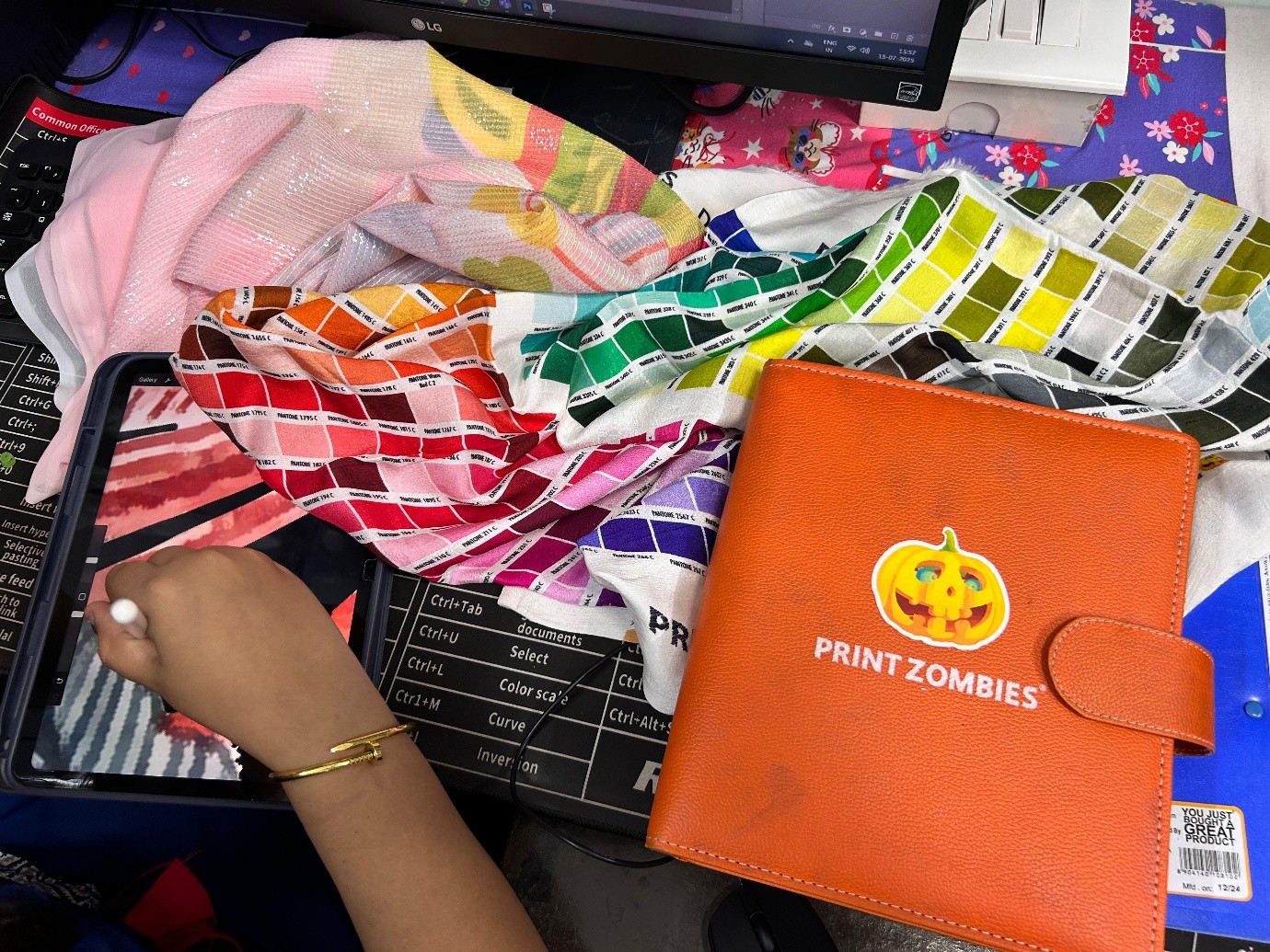
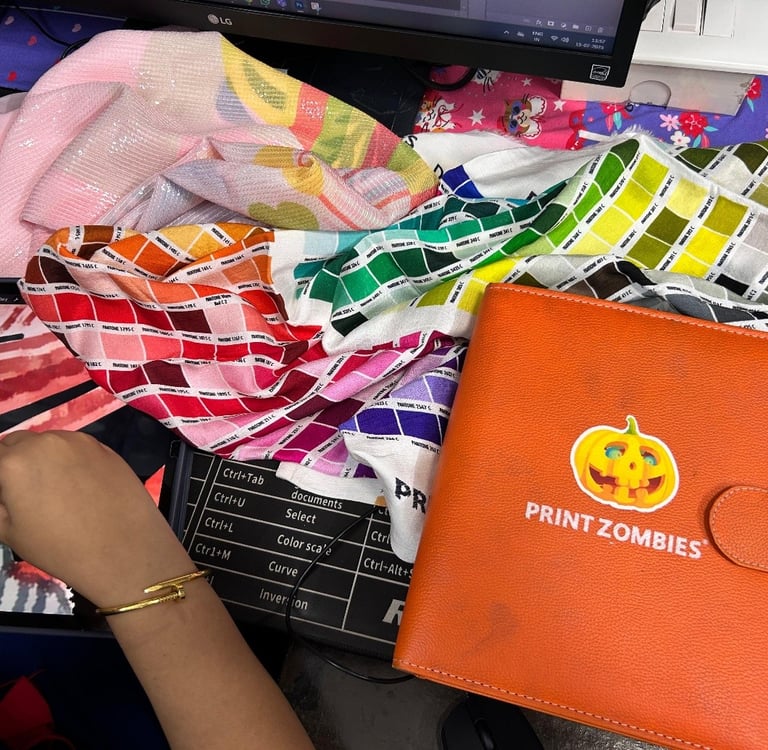
Sometimes designers are surprised by how many questions we ask early on.
Not because they didn’t explain clearly — but because they didn’t know certain things mattered yet.
This isn’t a gap in skill.
It’s a gap in exposure.
If you don’t deal with printing daily, you don’t automatically know:
which fabrics look similar but age differently,
which colours are most sensitive to process variation,
which combinations are hardest to repeat later,
and which shortcuts almost always backfire.
We flag these things early, not to complicate the process, but to prevent painful surprises later.
And yes — even with all this, fuckups still happen. Anyone who tells you otherwise is lying. Fabric printing is physical, not digital. But there’s a big difference between a controlled issue and a cascading failure.
Design awareness helps us keep issues contained.
Why this matters more at small quantities
At larger scales, mistakes can sometimes be absorbed.
At small quantities, they can break momentum completely.
If you’re producing under 500 meters, every decision matters more.
Every mismatch costs more.
Every delay hits harder.
This is exactly where a design-first mindset becomes critical.
Instead of pushing work through a predefined pipeline, we adapt the process to the project. Instead of forcing ideas to fit machinery, we adjust methods to fit intent.
That flexibility is hard to maintain in purely industrial setups.
It’s natural for design-led teams.
The quiet advantage most people don’t notice
There’s another side to this that rarely gets talked about.
Designers often hesitate to ask “basic” questions about production because they don’t want to sound inexperienced. That leads to assumptions. Assumptions lead to regret.
Because we come from the same background, those conversations tend to happen more openly. There’s less posturing, less pretending, and more practical problem-solving.
That trust loop matters.
It changes how early issues surface.
And it often saves projects without anyone realising it.
This isn’t about being better — it’s about being aligned
We’re not claiming that designers are better than industrialists.
They’re solving different problems.
Factories are brilliant at scale.
We’re focused on fit.
Fit between:
idea and fabric,
design and process,
sampling and repeatability,
expectation and outcome.
That alignment is what allows small, bespoke designers to move forward without constantly second-guessing production decisions.
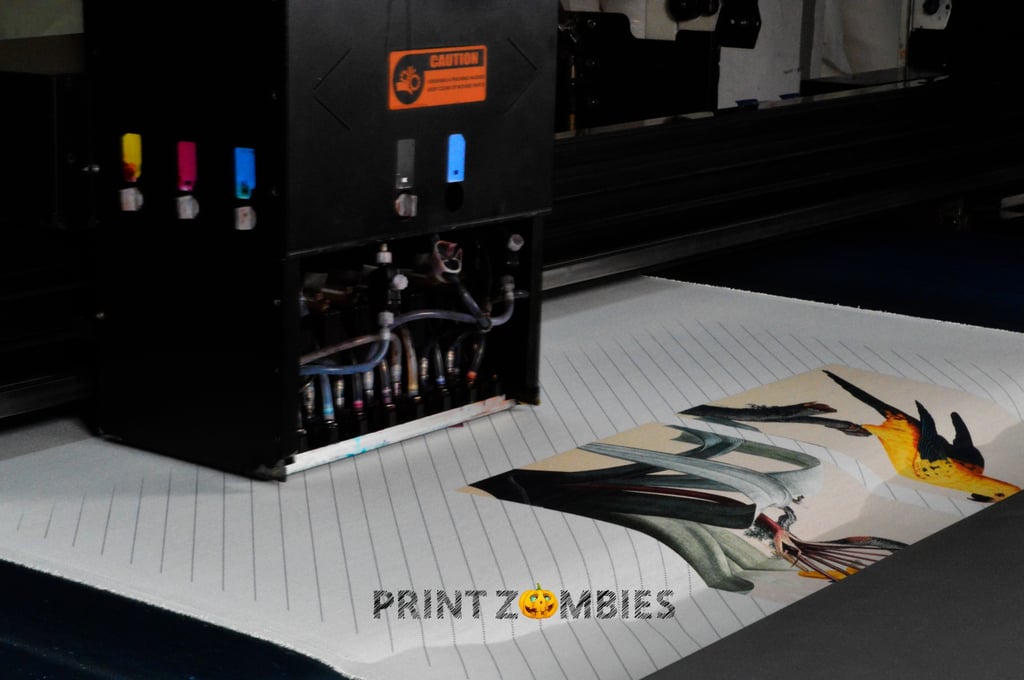
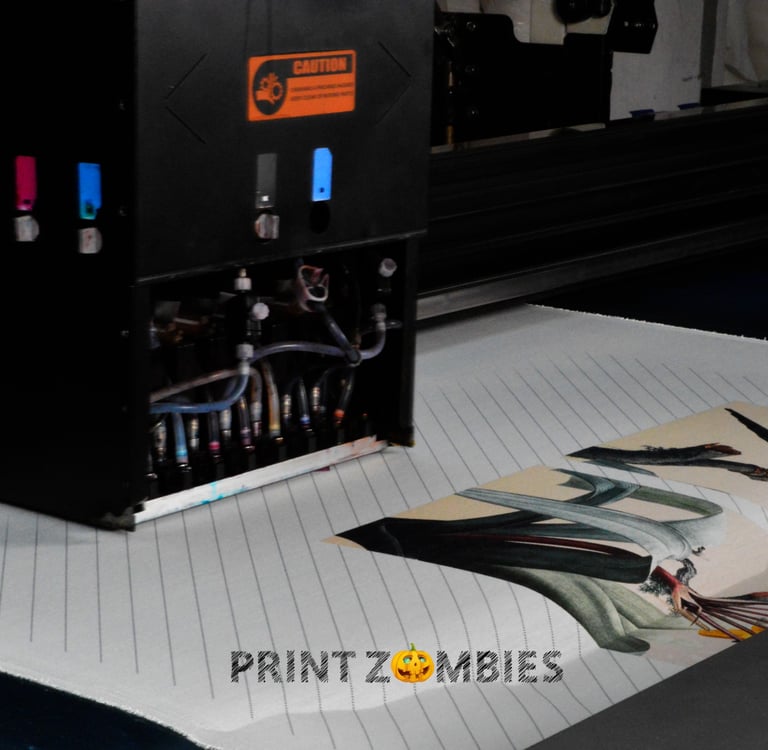
The real takeaway
For a long time, we assumed we needed to “look more industrial” to be taken seriously in printing.
What we learned instead was this:
the closer you stay to the design mindset, the more problems you prevent before they become expensive.
We’re designers first.
Printing is the tool — not the identity.
And for the kind of work we do, that order matters.
Useful Links
printzombies@gmail.com
+91 99999 11480
© 2025-2026 Print Zombies® – All Rights Reserved
Serving designers across UAE (Dubai, Abu Dhabi, Sharjah), Oman, Qatar, Saudi Arabia, Bahrain, Canada, USA and India — with the same care, creativity, and commitment in every meter.
Rated ★4.9 on Google with 280+ reviews from domestic and international designers.
Print Zombies is a digital fabric printing studio offering custom fabric printing with no MOQ and expert print designing support across 90+ premium fabric bases.
Quick Navigation Links
Parent Company
Pradisha YarnTech® Solutions Pvt. Ltd.
Delhi, India
pradishayarntech@gmail.com
info@printzombies.ae
Legal






Most Searched Topics
Fabric Sourcing for Digital Printing
Services in Canada - www.printzombies.com/ca
Services in UK - www.printzombies.co.uk
Services in India - www.printzombies.com