
We Thought Exporting Small Fabric Orders Was a Bad Idea.
Discover why designers consider Importing Digitally Printed Fabric from India for better fabric options,Fabric Import in Small quantity, flexible quantities, and competitive pricing.
3/12/20265 min read
This is something we don’t usually say out loud, but it matters.
Yes — we had the same doubt you’re probably having right now.
And honestly, we wasted a lot of time over it.
For almost a year, exporting small, custom fabric orders felt like the wrong move. Not because we weren’t prepared — we were. The processes were ready, the partners were in place, the capital was planned. On paper, nothing was missing.
What stopped us was a belief we didn’t question enough:
that export/import only makes sense for large quantities, and that doing it for small, custom orders would only add friction for designers.
Looking back, that belief wasn’t based on experience.
It was based on fear — fear of making things complicated for our clients, fear of things going wrong across borders, fear of adding layers where simplicity was needed.
So we waited.
And that waiting cost us time.
The moment reality contradicted our assumptions
When we finally decided to launch cross-border services, we didn’t do it loudly. No big announcement. No marketing push. We simply opened the door and started accepting international orders.
Within three months, something unexpected happened.
Nearly 25% of our revenue started coming from outside India.
More telling than the numbers was the feedback. Designers weren’t saying, “This feels risky” or “This feels complicated.” They were saying:
“This is actually easier than what we were doing earlier.”
That’s when it became clear that our original assumption was flawed — not because export suddenly became simpler, but because we misunderstood where the real complexity was supposed to live.
Designers aren’t supposed to think like industrialists
Here’s the uncomfortable truth we learned the hard way:
Most designers don’t struggle with exporting because exporting is inherently hard.
They struggle because they’re forced to manage production like factory owners.
Suddenly, they’re expected to think about:
fabric suitability,
printability, file prep, sampling risks, repeat consistency, customs paperwork, tax structures, shipping documentation,
and timelines that don’t forgive mistakes.
None of that is design work.
None of that helps you sell.
And yet, many designers quietly accept this as “part of the process”.
We don’t think it should be.
As designers ourselves, we strongly believe that your job is to design and sell. Production should support that — not compete for your attention or mental space.
That belief is at the core of why exporting small orders started to make sense for us.
Where the complexity actually belongs
Export feels messy only when the complexity is pushed onto the designer.
Our role is to absorb as much of that complexity as possible — and to do it deliberately, not reactively.
That starts much earlier than printing.
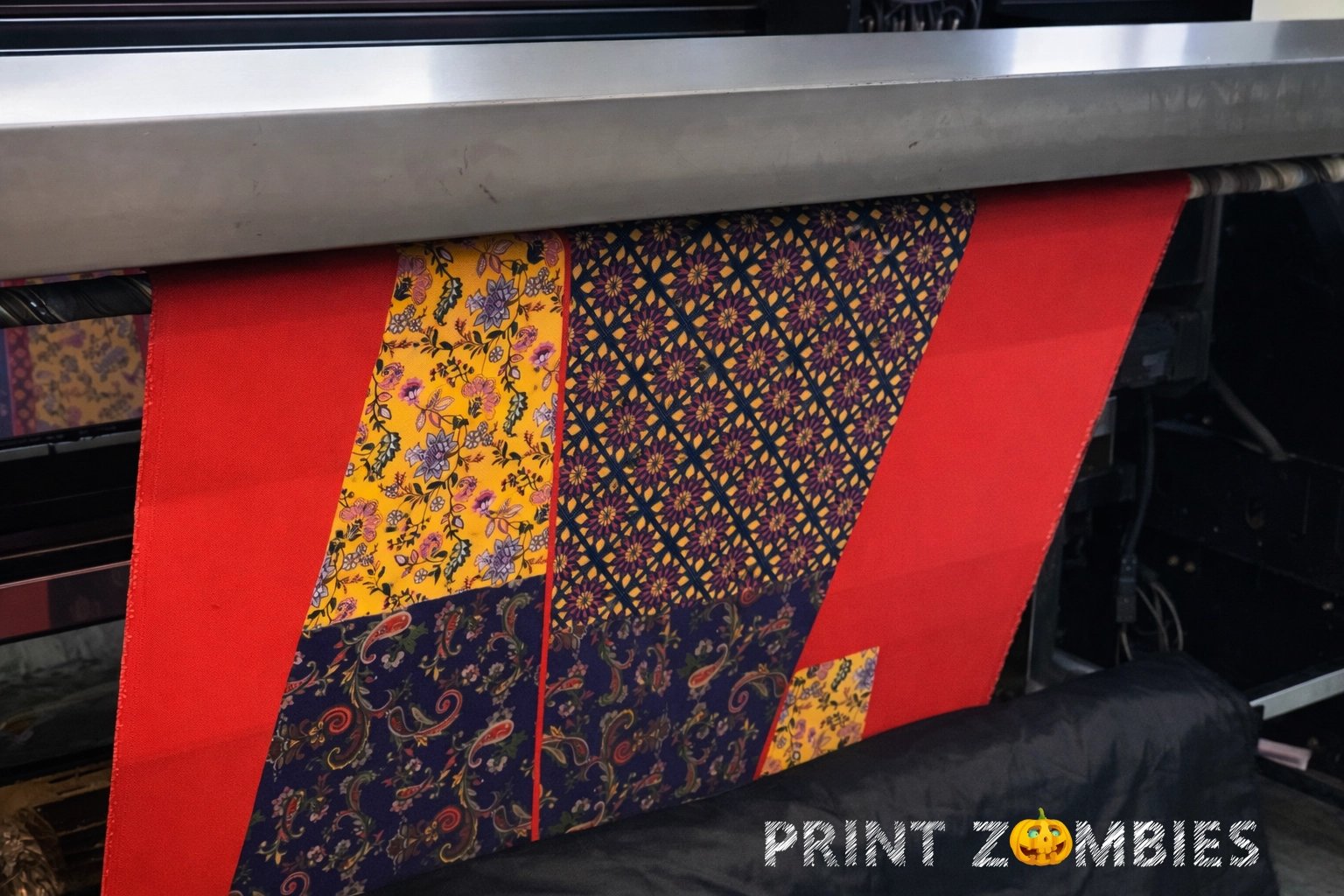
Fabric choice (the part most people underestimate)
One of the most common problems we see is designers choosing fabrics based on specs, names, or assumptions — not on how the fabric actually behaves once printed.
Two fabrics with similar GSM and fiber composition can behave very differently after printing. Hand feel changes. Drape changes. Colour response changes. Wash behaviour changes.
This is where a lot of disappointment starts — quietly.
We spend a disproportionate amount of time helping designers narrow down which fabrics actually print well, not just which ones sound right on paper. That includes avoiding fabrics that look good in theory but are unstable, inconsistent, or difficult to repeat.
Consistency over time (not just sampling)
Sampling is the easy part. Reordering is where things usually break.
We’ve seen designers market a fabric, get traction, and then hear:
“Sorry, that base is out of stock.”
That’s a nightmare.
Because we’re not tied to running a single factory line, we invest heavily in sourcing and holding a real, usable fabric catalogue. Not for show — but so that when you move from samples to production, you’re not forced to redesign because the base disappeared.
This is one of those things clients only appreciate after they’ve been burned elsewhere.
Files, basics, and the things you don’t know to ask yet
We don’t just print files.
We check them.
We develop them.
We flag basics that designers — understandably — may not be aware of yet.
This isn’t about intelligence or experience. It’s about exposure. If you don’t live inside production every day, there are blind spots. That’s normal.
And to be completely honest — fuckups still happen. Printing is a physical process, not software. But the difference between a painful failure and a manageable one is almost always preparation.
Our systems are designed to reduce risk, not pretend it doesn’t exist.
The export layer (where most people freeze)
Now add export on top of all this — and you can see why designers hesitate.
This is where our role becomes very clear.
We, along with our delivery partners, manage:
cross-border documentation,
export compliance,
invoicing,
and shipping workflows.
You’re not expected to learn export laws or tax structures just to get fabric printed.
We’ve also taken steps to reduce export taxes for our major markets, simply because if exporting is part of the workflow, it shouldn’t feel like a penalty.
The goal is simple:
export should feel like a logistical detail, not a strategic burden.
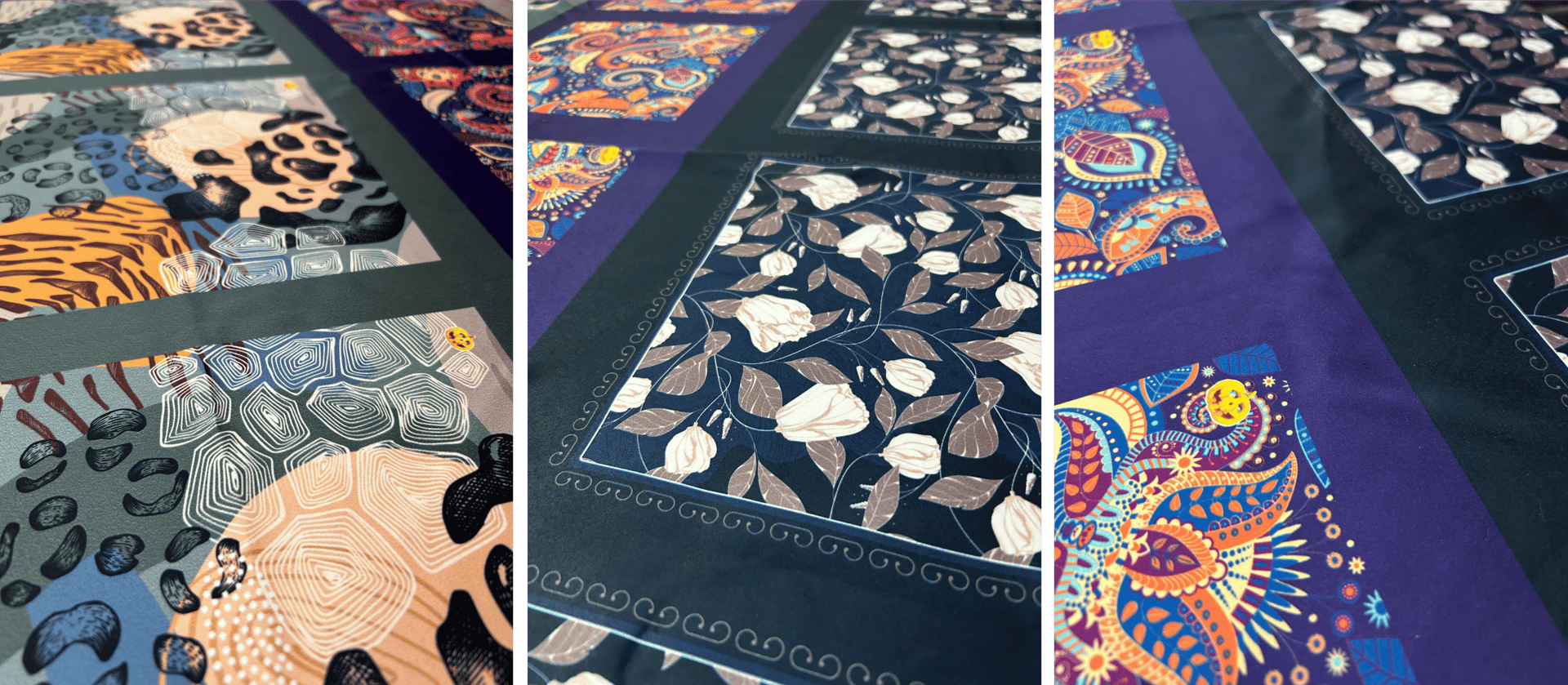
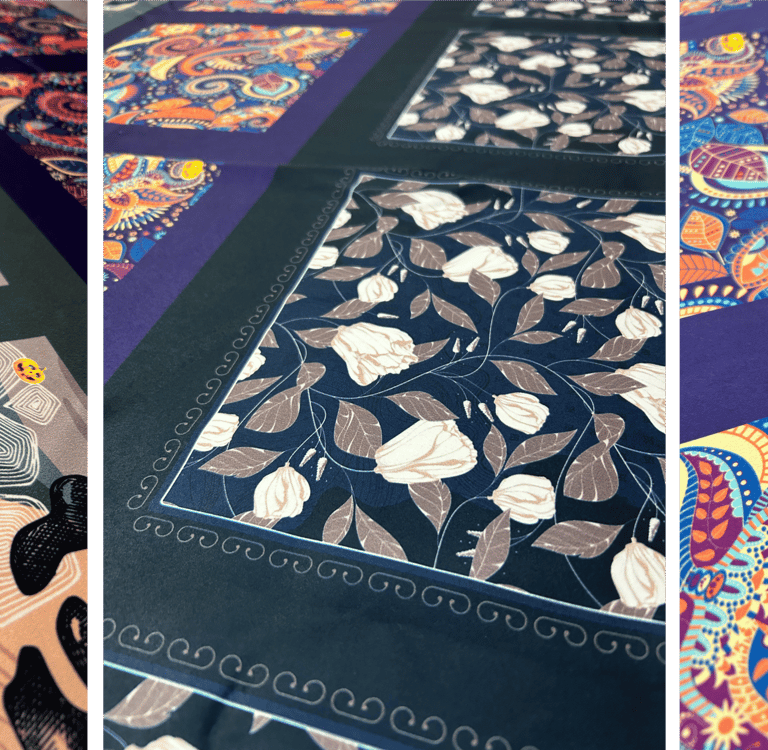
Why India actually works for small, custom orders
There’s a reason this clicked so fast once we started.
India isn’t just a textile hub because of scale. It’s a hub because of knowledge, skilled labour, and an ecosystem that understands nuance.
When you combine that with ethical production practices and respect for commitments, it becomes a very strong base for custom, creative work — especially at smaller quantities.
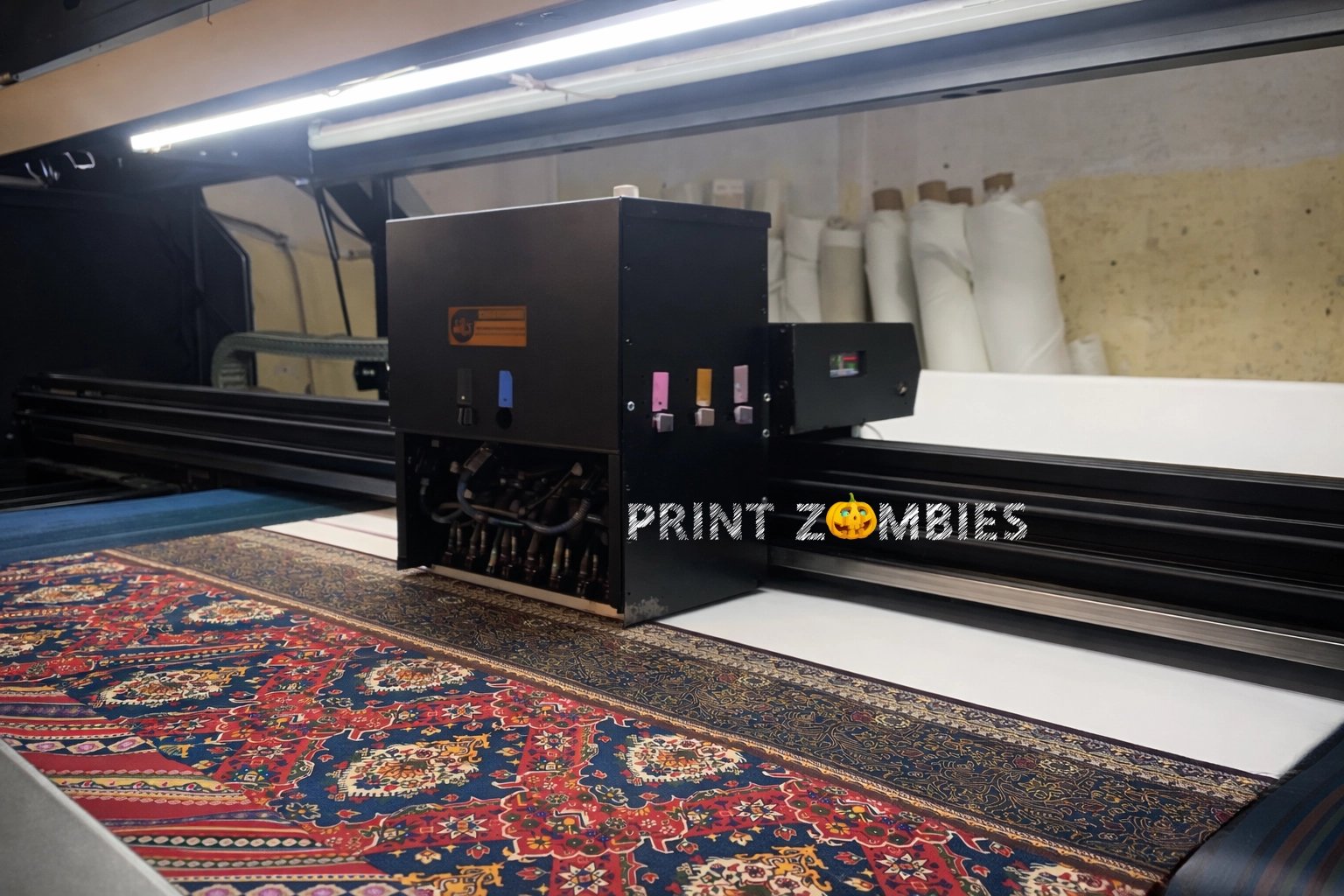
Print Zombies is built primarily for orders under 500 meters, a space most vendors avoid because their economics depend on bulk.
We’ve gone deep into this niche. Deep enough to intelligently club compatible orders, plan stocks effectively, and deliver on time without forcing designers into volumes they’re not ready for.
That depth didn’t come from theory.
It came from doing this again and again.
So… does export make sense for small quantities?
Here’s the honest answer:
If exporting means you personally manage production, paperwork, and risk — probably not.
If exporting means you get to focus on designing, selling, and growing your brand while someone else absorbs the complexity — then yes, it often makes a lot of sense.
We didn’t realise this early enough.
You don’t have to make the same mistake.
Our job is to make sure production stays in the background — where it belongs — and creativity stays in the foreground.
That’s the work we choose to do.
Useful Links
printzombies@gmail.com
+91 99999 11480
© 2025-2026 Print Zombies® – All Rights Reserved
Serving designers across UAE (Dubai, Abu Dhabi, Sharjah), Oman, Qatar, Saudi Arabia, Bahrain, Canada, USA and India — with the same care, creativity, and commitment in every meter.
Rated ★4.9 on Google with 280+ reviews from domestic and international designers.
Print Zombies is a digital fabric printing studio offering custom fabric printing with no MOQ and expert print designing support across 90+ premium fabric bases.
Quick Navigation Links
Parent Company
Pradisha YarnTech® Solutions Pvt. Ltd.
Delhi, India
pradishayarntech@gmail.com
info@printzombies.ae
Legal






Most Searched Topics
Fabric Sourcing for Digital Printing
Services in Canada - www.printzombies.com/ca
Services in UK - www.printzombies.co.uk
Services in India - www.printzombies.com